Categories
Category: go
-
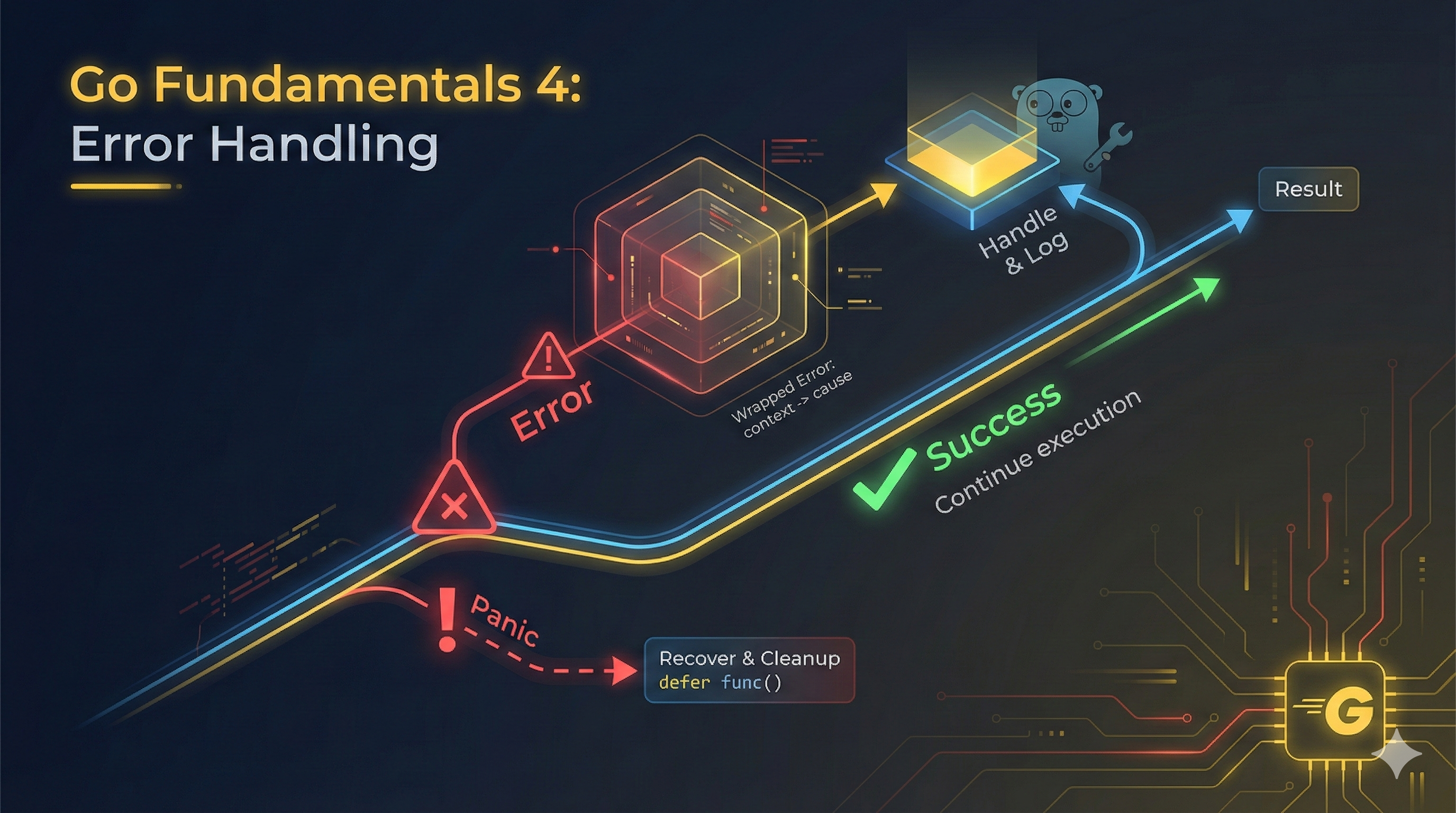
Go Fundamentals: Error Handling
This post covers Go error handling, including error values, error wrapping for context, and working with multiple errors.
-
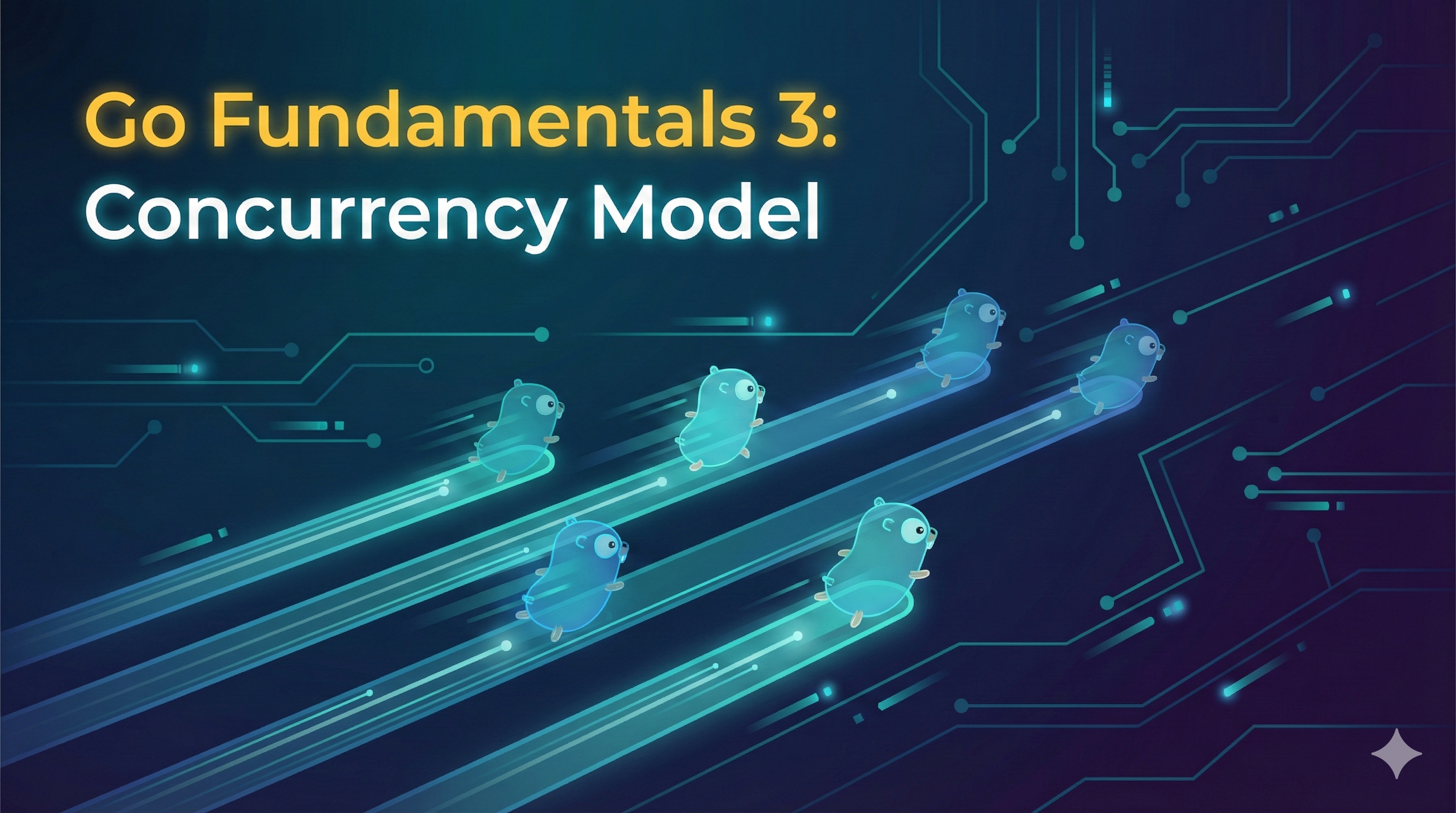
Go Fundamentals: Concurrency Model
This post covers Go’s concurrency model, including why it’s unique among major programming languages, how goroutines work, race conditions and the memory model, and synchronization mechanisms.
-
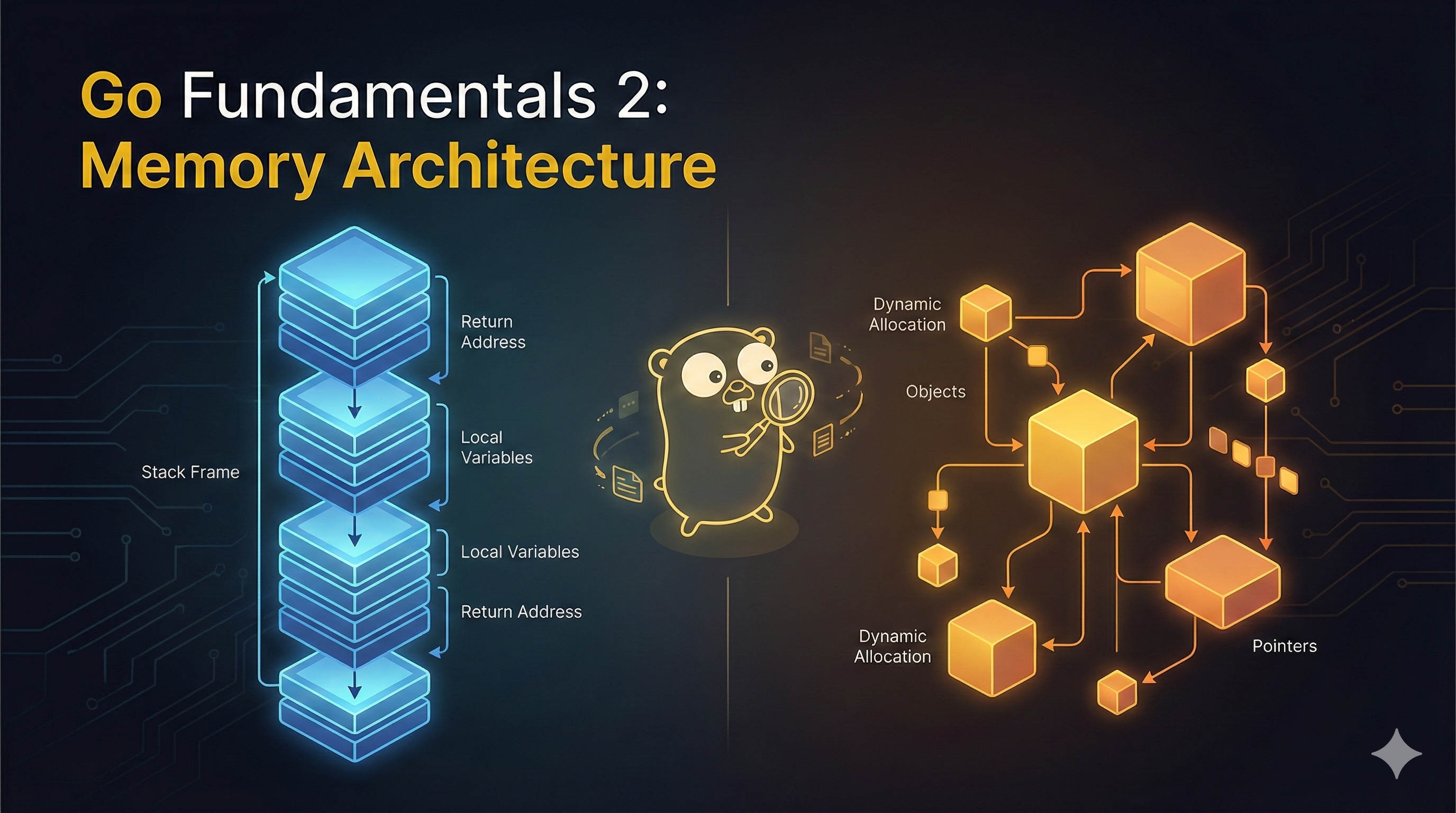
Go Fundamentals: Memory Architecture
This post covers Go memory architecture, including the call stack, heap allocation, escape analysis, garbage collection, and performance considerations for pointers.
-
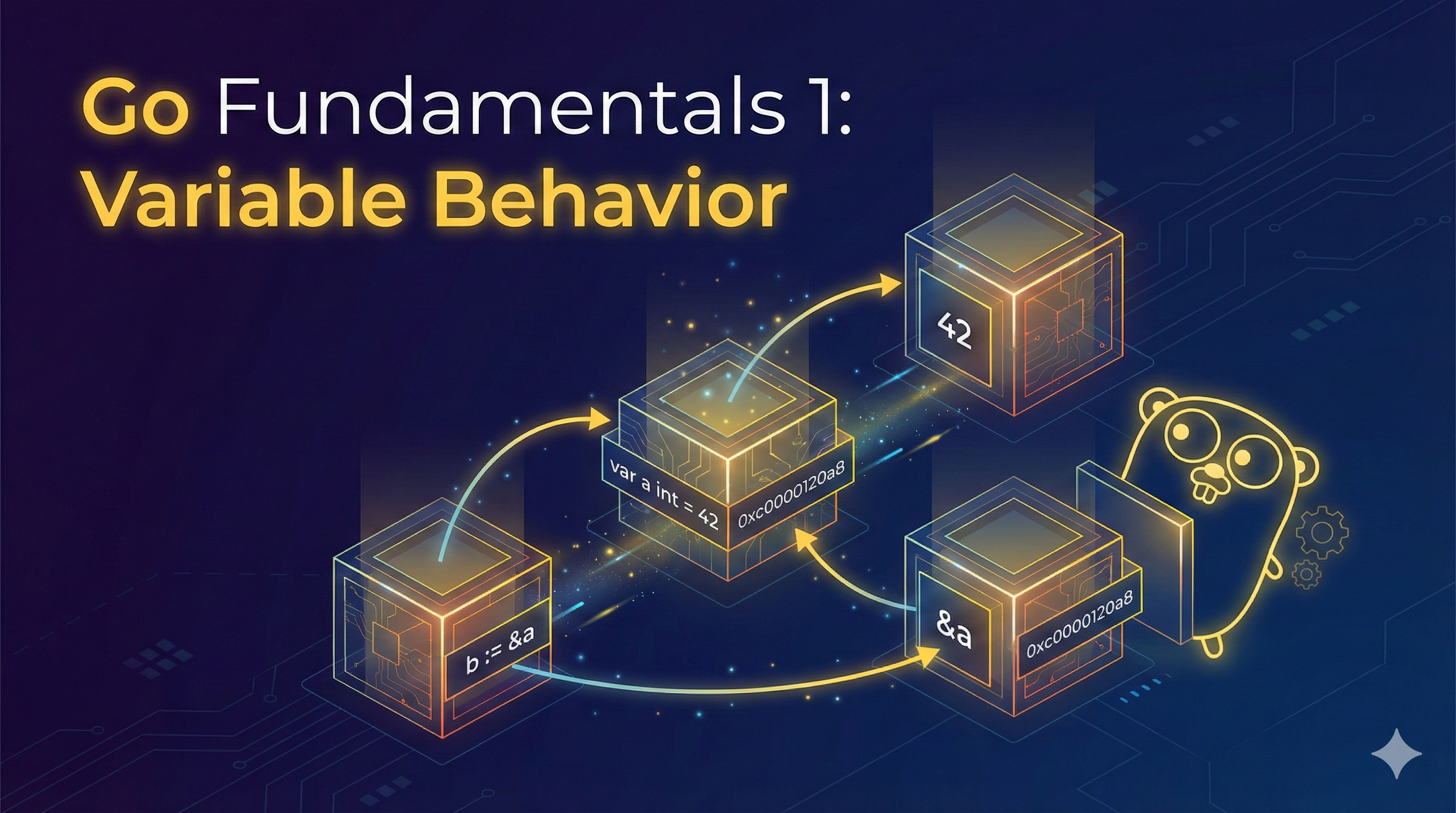
Go Fundamentals: Variable Behavior
This post covers Go variable behavior, including mutability, function pass types, zero values, and common pitfalls to avoid.
-
Finding The Best Go Project Structure - Part 2
TL;DR: This is a story about the internal journey we had in HUMAN Security to find the best project structure for Go, the decisions we’ve made, and the conclusions we’ve drawn. We’ve created an open-source...
-
Finding The Best Go Project Structure - Part 1
TL;DR: This is a story about the journey we’ve been on at HUMAN Security to find the best project structure for Go, what decisions we’ve made based on our exploration, and the conclusions we’ve drawn....
-
A Proposition For a Better Future For Go
This is a piece concluding a 3-article series with a proposition for a better future for Go. In the previous articles, we discussed the stronger sides of the language and presented the problematic ones. If...

-
We Need To Talk About The Bad Sides of Go
This is a story about the downsides of the Go programming language, the part about it that makes us less productive and our codebases less safe and less maintainable. And about propositions for improvement.

-
What Makes Go the Best Language
This is a story about the good and the bad sides of the Go programming language, about it being a time for a change, and about how carefully such a change must be handled. In...

-
Boosting Up JSON Performance of Unstructured Structs in Go
TL;DR: This is a story about how we trimmed 70% of our JSON parsing cloud costs by writing an open-source Go library called marshmallow. 🍬🚀

-
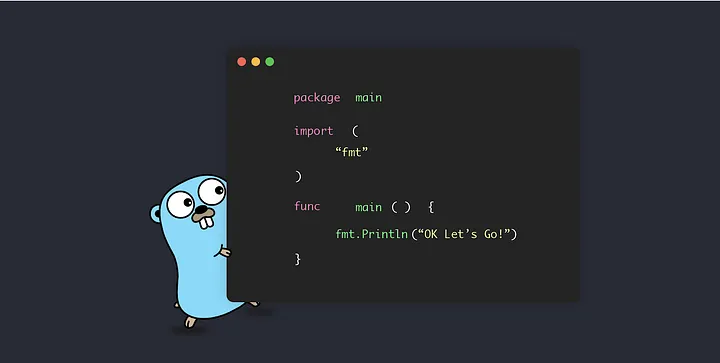
OK Let’s Go: Three Approaches for Structuring Go Code
The Go language was first announced in late 2009, and officially released in 2012, but has only started gaining serious traction in the last several years. It was one of the fastest growing languages of...
Category: architecture
-
ENVITE - Modern Dev Environments for Testing and Continuous Integration
TL;DR - This is a quick walkthrough of our experience writing and maintaining integration and end-to-end testing at HUMAN, what we’ve learned, how to apply it, and what are the main alternatives.

-
Finding The Best Go Project Structure - Part 2
TL;DR: This is a story about the internal journey we had in HUMAN Security to find the best project structure for Go, the decisions we’ve made, and the conclusions we’ve drawn. We’ve created an open-source...
-
Finding The Best Go Project Structure - Part 1
TL;DR: This is a story about the journey we’ve been on at HUMAN Security to find the best project structure for Go, what decisions we’ve made based on our exploration, and the conclusions we’ve drawn....
-
Testing Strategies in Microservices Architecture
TL;DR - this article discusses automated testing in microservices architecture, how to keep it as simple as possible, and how to gain maximum reliability during the rollout of big changes.
-
Code Sharing in Microservices Architecture
TL;DR - This is a story of leveraging various tools to empower microservices architecture, how we use it at HUMAN, and when to use and not use it.
-
Version Control Layout in Microservices Architecture
TL;DR - this is a discussion about the pros and cons of version control layout alternatives. There is a ton of reading material regarding the pros and cons of monorepo vs. multirepo. In this article,...
-
Designing Developer Experience in Microservices Architecture
TL;DR — This is the intro to a three-piece article series discussing key decisions in designing developer experience and development cycle for teams in a microservices architecture.

-
OK Let’s Go: Three Approaches for Structuring Go Code
The Go language was first announced in late 2009, and officially released in 2012, but has only started gaining serious traction in the last several years. It was one of the fastest growing languages of...
Category: microservices
-
ENVITE - Modern Dev Environments for Testing and Continuous Integration
TL;DR - This is a quick walkthrough of our experience writing and maintaining integration and end-to-end testing at HUMAN, what we’ve learned, how to apply it, and what are the main alternatives.
-
Testing Strategies in Microservices Architecture
TL;DR - this article discusses automated testing in microservices architecture, how to keep it as simple as possible, and how to gain maximum reliability during the rollout of big changes.
-
Code Sharing in Microservices Architecture
TL;DR - This is a story of leveraging various tools to empower microservices architecture, how we use it at HUMAN, and when to use and not use it.
-
Version Control Layout in Microservices Architecture
TL;DR - this is a discussion about the pros and cons of version control layout alternatives. There is a ton of reading material regarding the pros and cons of monorepo vs. multirepo. In this article,...
-
Designing Developer Experience in Microservices Architecture
TL;DR — This is the intro to a three-piece article series discussing key decisions in designing developer experience and development cycle for teams in a microservices architecture.
-
Request-Response Olympics — The Search For The Perfect Request-Response Protocol
Services tend to interact with each other. It may be microservices collaboratively processing your data, separate systems notifying each other on various events, or simply data propagating from one place to another. There are countless...

Category: developer-experience
-
ENVITE - Modern Dev Environments for Testing and Continuous Integration
TL;DR - This is a quick walkthrough of our experience writing and maintaining integration and end-to-end testing at HUMAN, what we’ve learned, how to apply it, and what are the main alternatives.
-
Testing Strategies in Microservices Architecture
TL;DR - this article discusses automated testing in microservices architecture, how to keep it as simple as possible, and how to gain maximum reliability during the rollout of big changes.
-
Code Sharing in Microservices Architecture
TL;DR - This is a story of leveraging various tools to empower microservices architecture, how we use it at HUMAN, and when to use and not use it.
-
Version Control Layout in Microservices Architecture
TL;DR - this is a discussion about the pros and cons of version control layout alternatives. There is a ton of reading material regarding the pros and cons of monorepo vs. multirepo. In this article,...
-
Designing Developer Experience in Microservices Architecture
TL;DR — This is the intro to a three-piece article series discussing key decisions in designing developer experience and development cycle for teams in a microservices architecture.
Category: testing
-
ENVITE - Modern Dev Environments for Testing and Continuous Integration
TL;DR - This is a quick walkthrough of our experience writing and maintaining integration and end-to-end testing at HUMAN, what we’ve learned, how to apply it, and what are the main alternatives.
-
Testing Strategies in Microservices Architecture
TL;DR - this article discusses automated testing in microservices architecture, how to keep it as simple as possible, and how to gain maximum reliability during the rollout of big changes.
Category: performance
Category: programming-languages
-
A Proposition For a Better Future For Go
This is a piece concluding a 3-article series with a proposition for a better future for Go. In the previous articles, we discussed the stronger sides of the language and presented the problematic ones. If...
-
We Need To Talk About The Bad Sides of Go
This is a story about the downsides of the Go programming language, the part about it that makes us less productive and our codebases less safe and less maintainable. And about propositions for improvement.
-
What Makes Go the Best Language
This is a story about the good and the bad sides of the Go programming language, about it being a time for a change, and about how carefully such a change must be handled. In...
Category: inheritance
-
The Tragic Death of Inheritance
TL;DR - this is a story about how I felt forced to give up inheritance and object-oriented programming, and still missed it for a very long time. And why now, half a decade later, I...

-
The Tragic Death of Inheritance (Clean Version)
The Tragic Death of Inheritance (Clean Version)
Category: composition
-
The Tragic Death of Inheritance
TL;DR - this is a story about how I felt forced to give up inheritance and object-oriented programming, and still missed it for a very long time. And why now, half a decade later, I...
-
The Tragic Death of Inheritance (Clean Version)
The Tragic Death of Inheritance (Clean Version)
Category: oop
-
The Tragic Death of Inheritance
TL;DR - this is a story about how I felt forced to give up inheritance and object-oriented programming, and still missed it for a very long time. And why now, half a decade later, I...
-
The Tragic Death of Inheritance (Clean Version)
The Tragic Death of Inheritance (Clean Version)
Category: coding-agents
-
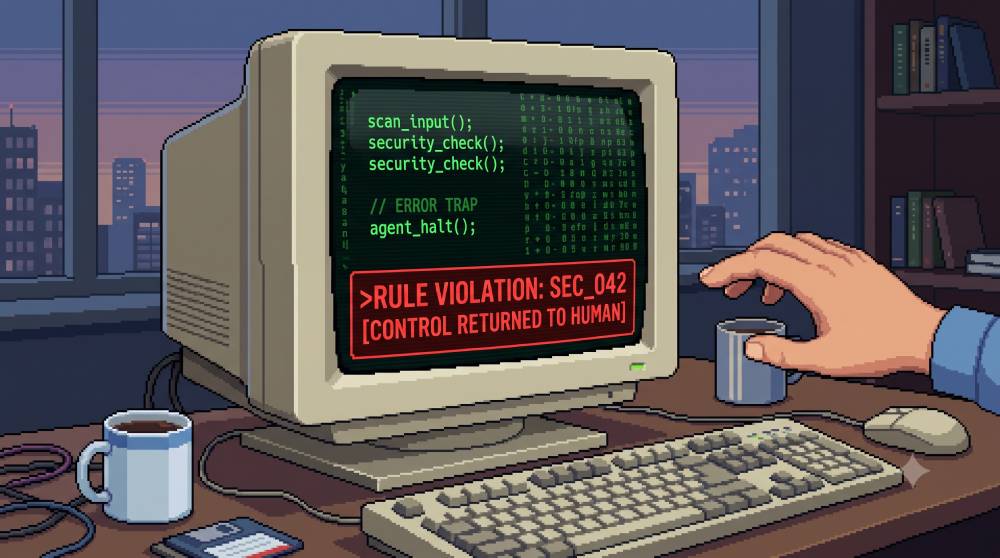
Agentic Control for Software Engineers
Agentic Control for Software Engineers Article 2 of 2 1. SaaS Is Dead 2. Agentic Control for Software Engineers ← You are here
-
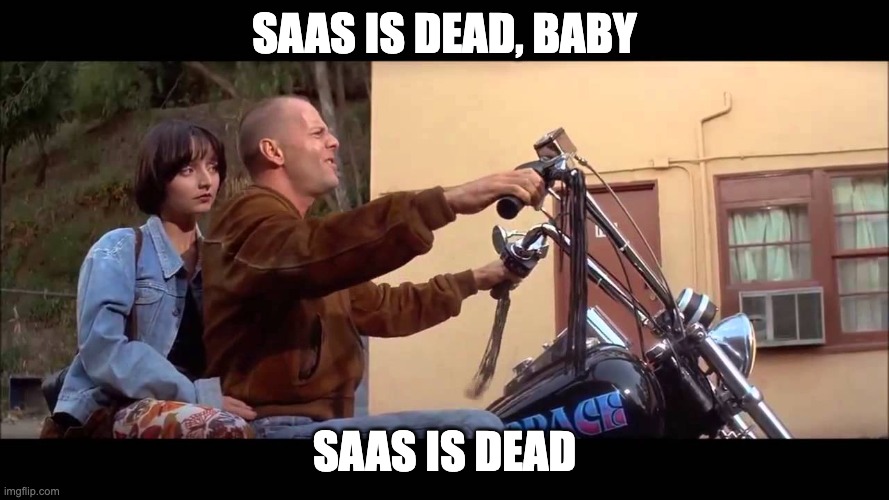
SaaS *is* dead. But not because AI "killed" it, because AI killed it.
Agentic Control for Software Engineers Article 1 of 2 1. SaaS Is Dead ← You are here 2. Agentic Control for Software Engineers
-
Taking Charge in Agentic Coding Sessions
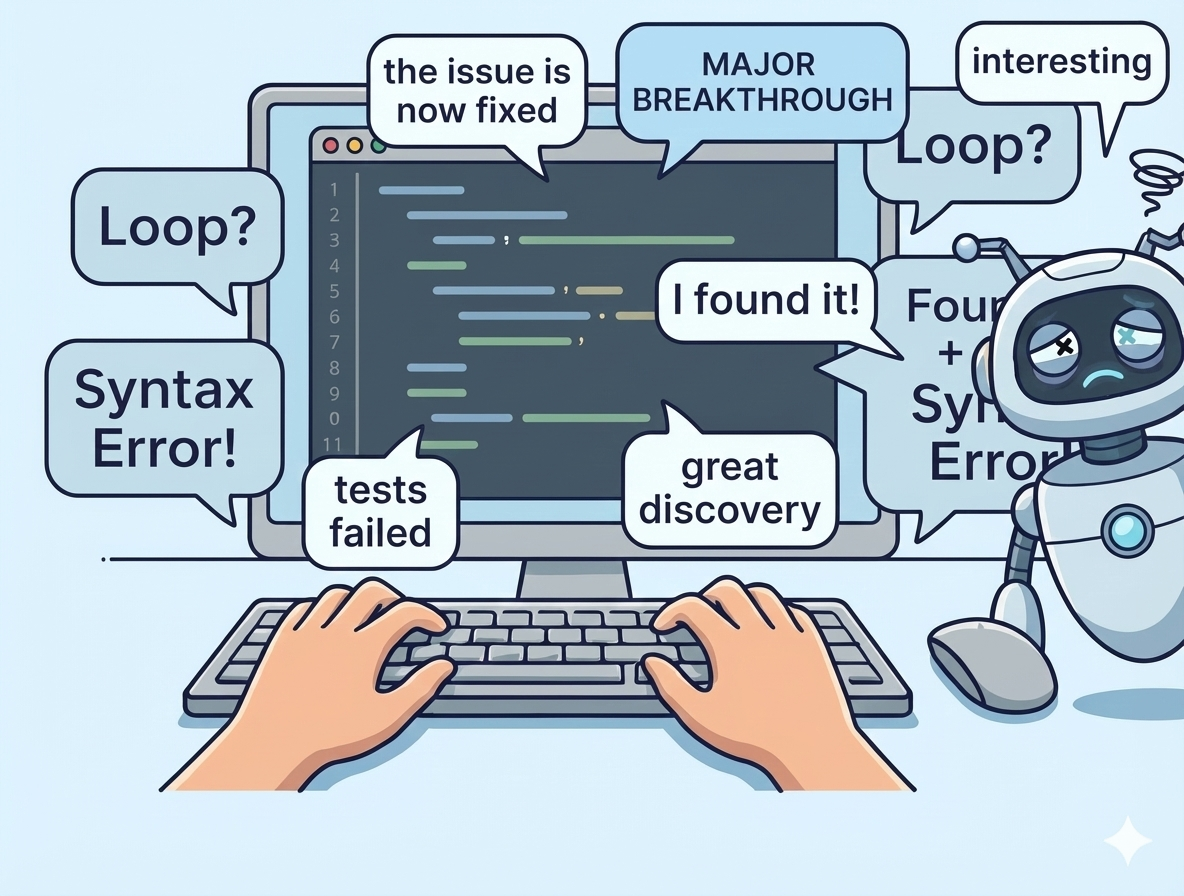
Have you ever done an agentic coding session? I mean, not just using AI for auto-completion or writing specific functions. I mean giving it an entire task and saying “good luck, buddy”.If you have, you...
Category: llm
-
Agentic Control for Software Engineers
Agentic Control for Software Engineers Article 2 of 2 1. SaaS Is Dead 2. Agentic Control for Software Engineers ← You are here
-
SaaS *is* dead. But not because AI "killed" it, because AI killed it.
Agentic Control for Software Engineers Article 1 of 2 1. SaaS Is Dead ← You are here 2. Agentic Control for Software Engineers
-
Taking Charge in Agentic Coding Sessions
Have you ever done an agentic coding session? I mean, not just using AI for auto-completion or writing specific functions. I mean giving it an entire task and saying “good luck, buddy”.If you have, you...